
Tuesday 15th July 2025
Social housing plays a critical role in providing affordable, secure homes for individuals and families who need them most. In an era where housing costs continue to rise and access to quality living conditions becomes increasingly unequal, social housing offers more than a safety net, it delivers stability, dignity, and opportunity. Yet providing a roof over someone’s head is only the starting point.
A well designed social housing scheme should also promote long-term well-being, community resilience, and environmental sustainability. This is where landscape design becomes a powerful tool in ensuring these developments don’t just meet minimum standards, but offer environments that support thriving, healthy lives.
Access to outdoor spaces is particularly vital for people in social housing, who may not have private gardens or balconies. In dense urban areas, communal green areas including gardens, terraces, parks, and play spaces act as essential extensions of the home. These spaces provide residents with a chance to relax, exercise, and socialise in safe and supportive surroundings, which in turn reduces stress, improves mental health and helps with loneliness.
Signal Park Square in Tolworth shows how collaborative landscape design can enhance social housing by creating vibrant, inclusive communities. At the heart of a child-friendly neighbourhood in Kingston, the 3,000sqm square supports sociability, health, and play through safe, car-free areas and flexible open space. High-quality materials and a pedestrian-focused layout turn the streetscape into a welcoming place for everyday life. Acting as a spill-out space for nearby shops and facilities, the square forms a dynamic “playborhood” that encourages community ownership and connection.
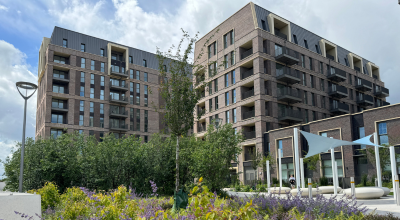
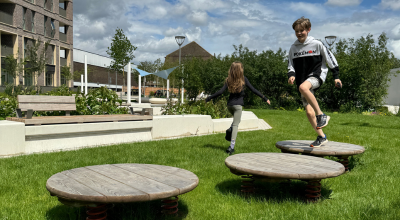
Signal Park
For social housing residents, many of whom are living on low incomes or face barriers such as unemployment, health issues, or caring responsibilities, a secure and decent home is a launchpad to stability. But too often, design in social housing is driven by cost alone. When landscape is deprioritised, the result can be isolating and unwelcoming environments that limit opportunity, reinforce inequality and encourage antisocial behaviours.
A well-designed landscape that is cared for and embraced by residents can counteract these challenges to foster pride, connection, and a sense of ownership that naturally discourages neglect and antisocial behaviour. To create truly supportive environments, landscape must be treated as essential infrastructure, not an afterthought.
This means embedding key principles into the design of social housing from the outset, including:
• Affordability through durability: Using robust materials and low maintenance planting ensures longevity, reducing ongoing costs while still creating attractive spaces.
• Accessibility for all: Outdoor spaces must be fully inclusive, designed with accessibility in mind so that residents of all ages and abilities can benefit equally.
• Variety: Landscape spaces should be varied in nature and should accommodate passive and active spaces to support different modes of use throughout the day and across seasons.
• Safety and security: Clear sightlines, lighting, and appropriate planting can enhance safety while still promoting comfort and openness.
• Community resilience: Shared gardens, allotments, and playgrounds support local cohesion and can help build networks of mutual support, particularly important for vulnerable residents.
• Health and well-being: Integrating nature into the living environment supports physical and mental health, which can reduce strain on public services and improve overall quality of life.
Leaside Lock Phase 2 demonstrates how thoughtful landscape design can add lasting value and liveability to social housing. Located beside the River Lea and the historic Three Mills Conservation Area, the scheme draws on its industrial heritage with robust, low-maintenance materials and a simple, durable design language.
Reed-inspired planting climbs through the riverside edge, bringing a sense of the wild into the public realm and enhancing biodiversity and well-being. Courtyard spaces are carefully designed to maximise connectivity, with planting and paving that reflect the tones and textures of the local landscape.
Prioritising inclusive, flexible outdoor areas for play, rest, and social interaction, the landscape fosters safety, identity, and long-term community resilience.
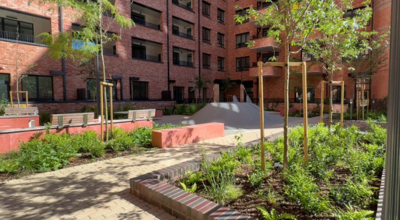
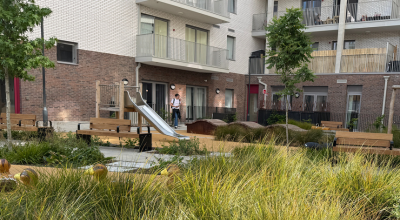
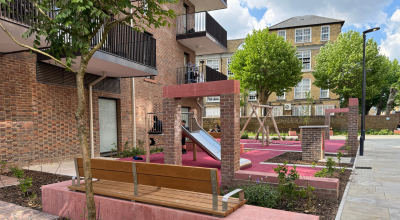
Leaside Lock; inclusive and green public realm outdoor spaces with opportunities for play
When social housing schemes integrate green, accessible, and safe outdoor spaces, they not only meet the basic need for shelter, but also reflect a deeper commitment to social equity and human dignity.
As housing providers and local authorities face growing pressure to deliver more homes, we must not lose sight of quality, including what lies between and around the buildings. Social housing should be a source of stability, health, and hope. By embedding thoughtful, inclusive landscape design into new developments, we can ensure that affordability and security go hand-in-hand with pride, comfort, and a better quality of life for those who need it most.
By Angeli Ganoo-Fletcher, Director of Landscape at PRP

Women in Social Housing (WISH) CIC is a Community Interest Company registered in England and Wales (with registered number 12049547) for women working in the affordable housing sector.
Our podcast in which we talk to inspiring women from the social housing sector is available from wherever you get your podcasts and on our YouTube channel!


Copyright 2026 Women in Social Housing (WISH) CIC. All rights reserved. Registered Office Address: Springfield House Springfield Road Horsham West Sussex RH12 2RG
Join the WISH newsletter
Register to receive our WISH newsletter and be updated on upcoming events.
